
Which founders are building AI-native rocketships?
What data reveals about the founders of 20 of the fastest growing AI-native companies

👋 Welcome to AI-native GTM!
AI-native companies are re-writing the GTM playbook. Every other week, I highlight the stories, frameworks and patterns behind some of today’s fastest growing startups. You can expect deep dives, analysis and insights to inspire the next generation of AI-native founders and operators.
AI is rewriting the playbook for building billion-dollar companies. I analyzed 20 of the fastest-growing AI-native companies to understand what makes their founders different. These companies—17 venture-backed and three bootstrapped—have all been founded in the last five years and crossed the $50 million ARR threshold, making them among the most successful in the current AI wave. They are also extraordinarily efficient: collectively generating $2.8 billion in annualized revenue while averaging $1M per employee—10x the typical SaaS benchmark.
The 20 companies in this analysis are the following: ElevenLabs, Lovable, Gamma, Mercor, Sierra, Genspark, Anysphere, Motion, Bolt, Perplexity, Manus, Heygen, Higgsfield AI, Cognition, Synthesia, Together AI. Here is the link to the dataset.
The 50 founders behind them offer a compelling portrait of what it takes to build a breakout AI company.
Let’s dive in 👇
You Don’t Need a Decade of Experience (But You Do Need Some)
One of the most striking findings: you don’t need to be a grizzled industry veteran to build a successful AI company. Only 22% of founders had more than 10 years of work experience before starting their companies. However, raw youth isn’t the answer either—63% had at least 5 years of professional experience under their belts.
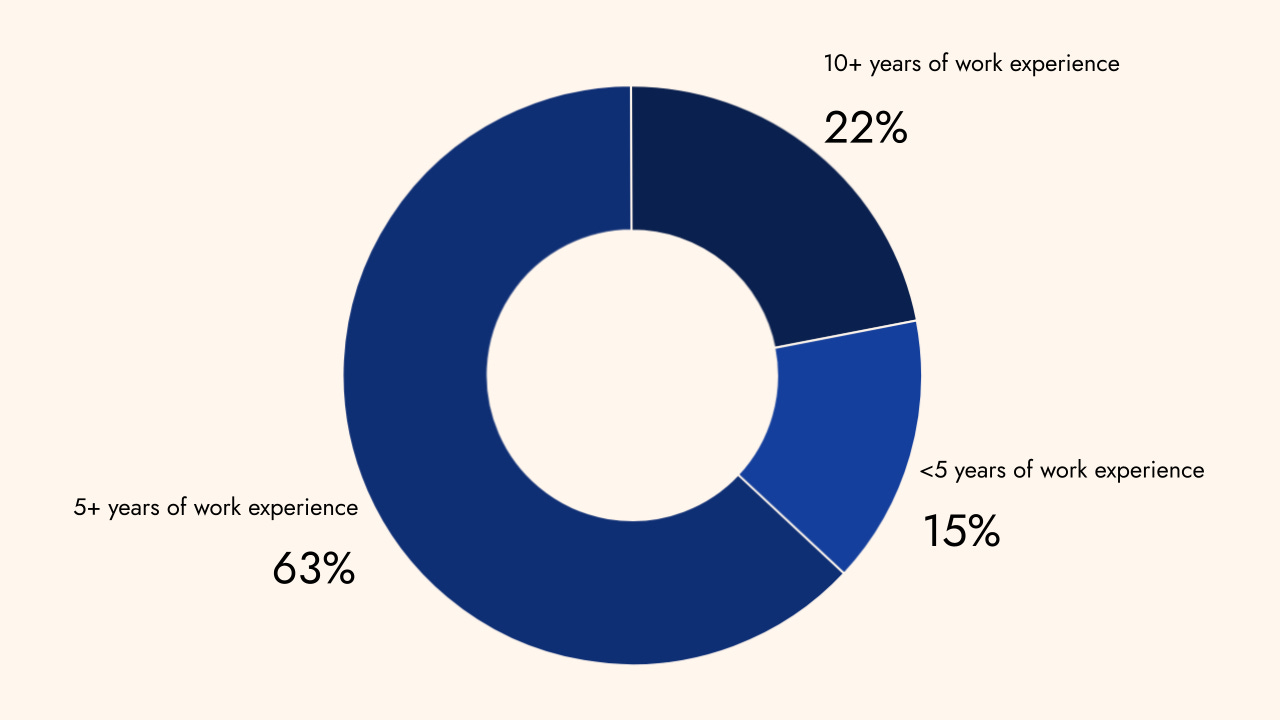
This suggests AI-native companies are being built by founders who have enough experience to understand how businesses operate but aren’t so entrenched in traditional ways of thinking that they miss the paradigm shift AI represents.
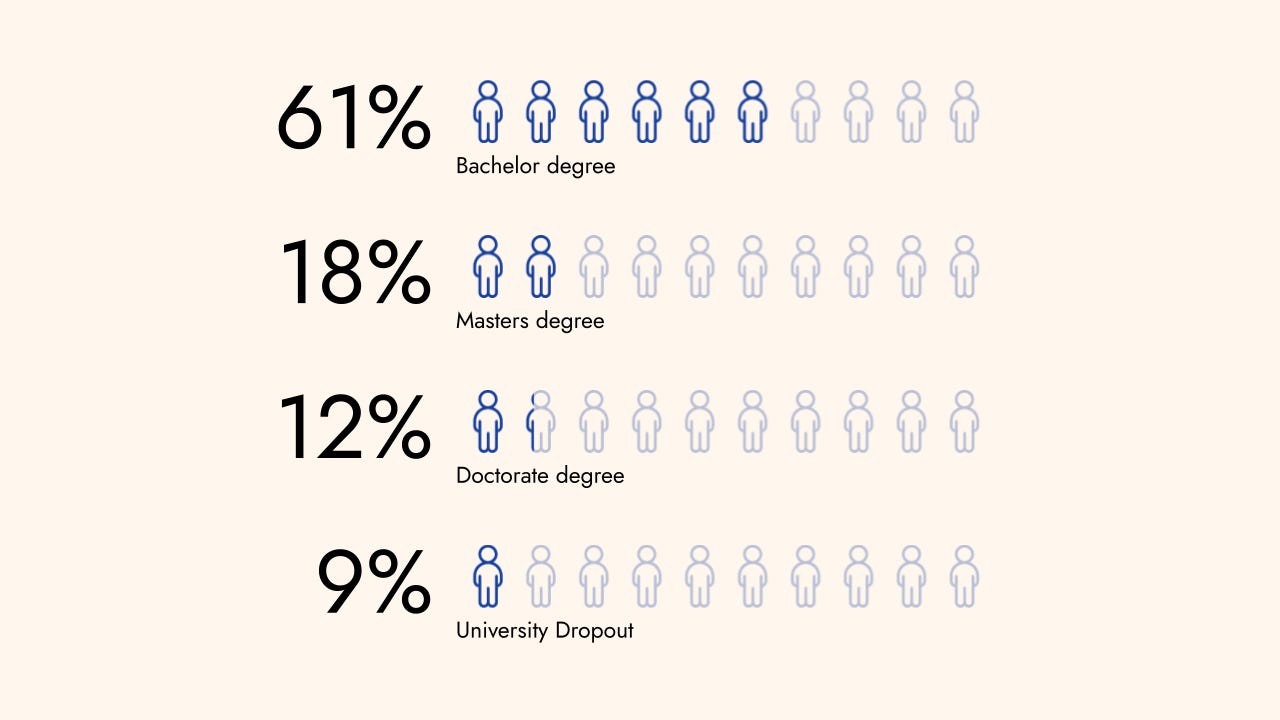
The educational profile reinforces this pattern of “experienced but not over-credentialed.” While 61% hold bachelor’s degrees (predominantly in computer science), the dataset includes four university dropouts alongside six PhDs. This distribution suggests that while formal education provides a valuable foundation, the rapid pace of AI innovation rewards those who can learn and adapt quickly over those with the most impressive academic pedigrees.
First-Time Founders Are Winning Big
Contrary to the Silicon Valley narrative that repeat founders have an inherent advantage, 65% of the founders in our dataset were building their first company. Only 35% were repeat founders. This is remarkable given that many investors actively seek out entrepreneurs with previous exits.
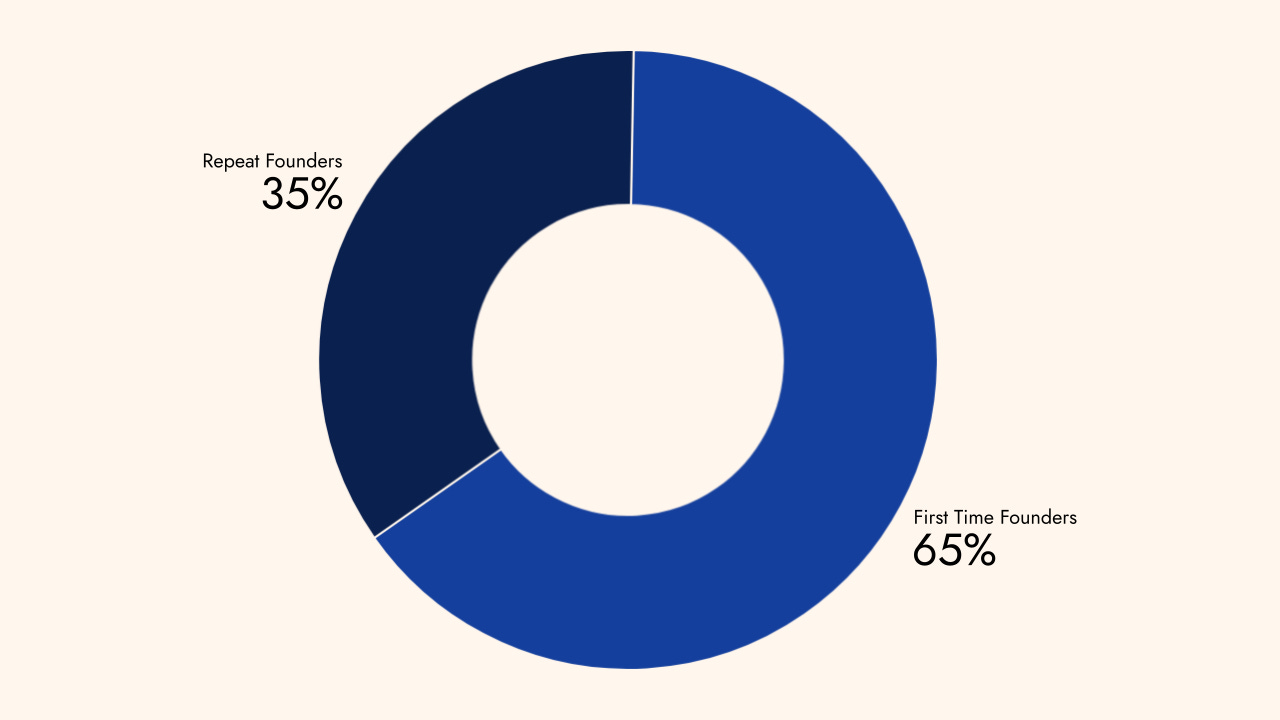
This discrepancy reveals an important dynamic: successful AI-native companies often pair first-time founders who bring fresh perspectives and deep technical expertise with experienced entrepreneurs who understand the mechanics of company building. It’s not about having a team of serial entrepreneurs; it’s about having the right mix of fresh thinking and battle-tested experience.
The AI wave may be so fundamentally different from previous technology shifts that prior experience building software companies offers less of an advantage than domain expertise and technical chops. It’s a new game with new rules, and first-time founders aren’t necessarily at a disadvantage.
The Technical Co-Founder Is Non-Negotiable
Here’s one finding with zero ambiguity: 100% of these companies have at least one technical co-founder. Every single one.
Unlike previous generations of software companies where non-technical founders could sometimes bootstrap their way to product-market fit through outsourcing or hiring, AI-native companies appear to require deep technical expertise from day one.
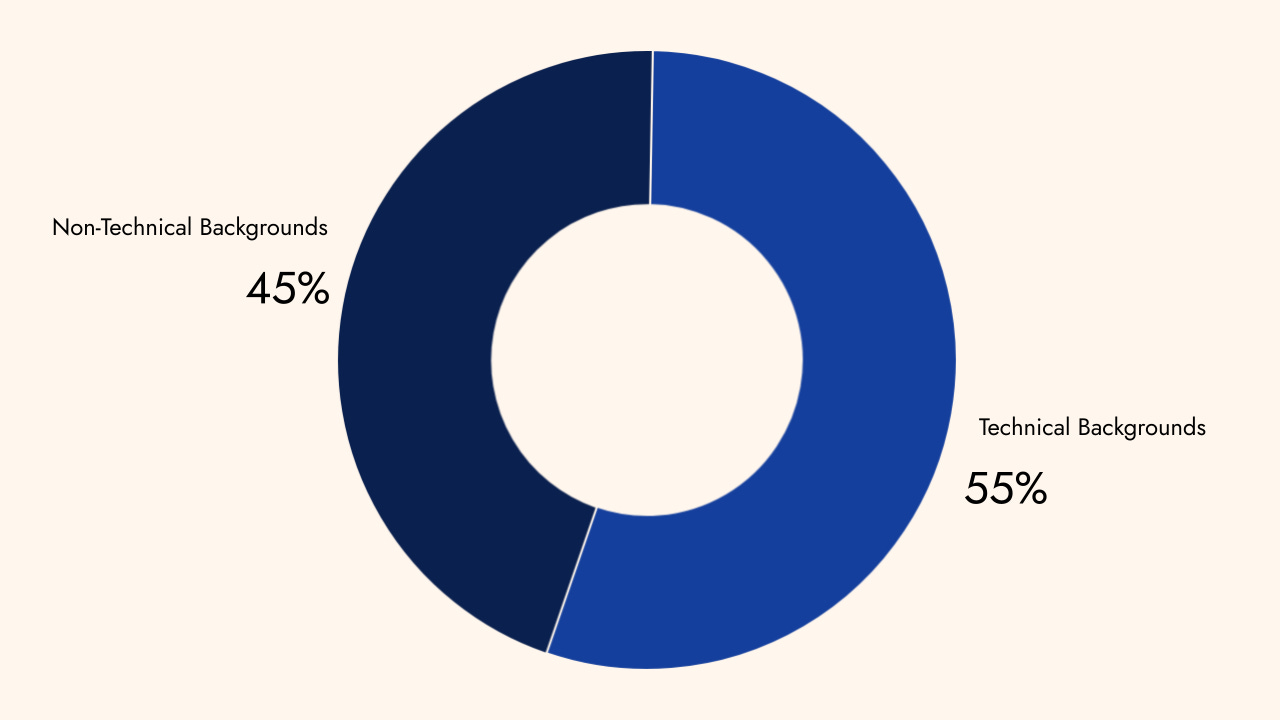
The average founding team size of 2.5 founders suggests these companies favor focused, technically competent teams over larger, more diverse founding groups. Yet surprisingly, only 55% of individual founders have technical backgrounds, indicating that while technical capability is essential at the company level, successful AI companies still need founders who bring complementary skills in sales, growth, operations, and business strategy.
Domain Knowledge Matters More Than Prestige
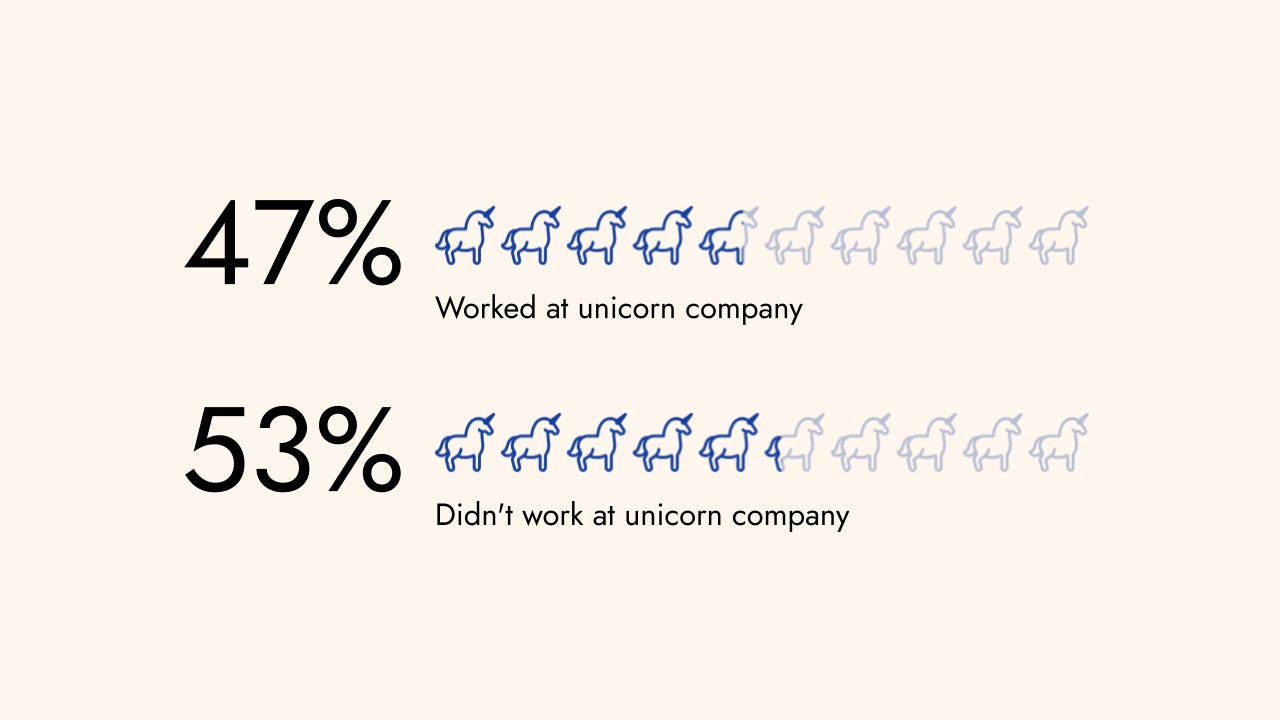
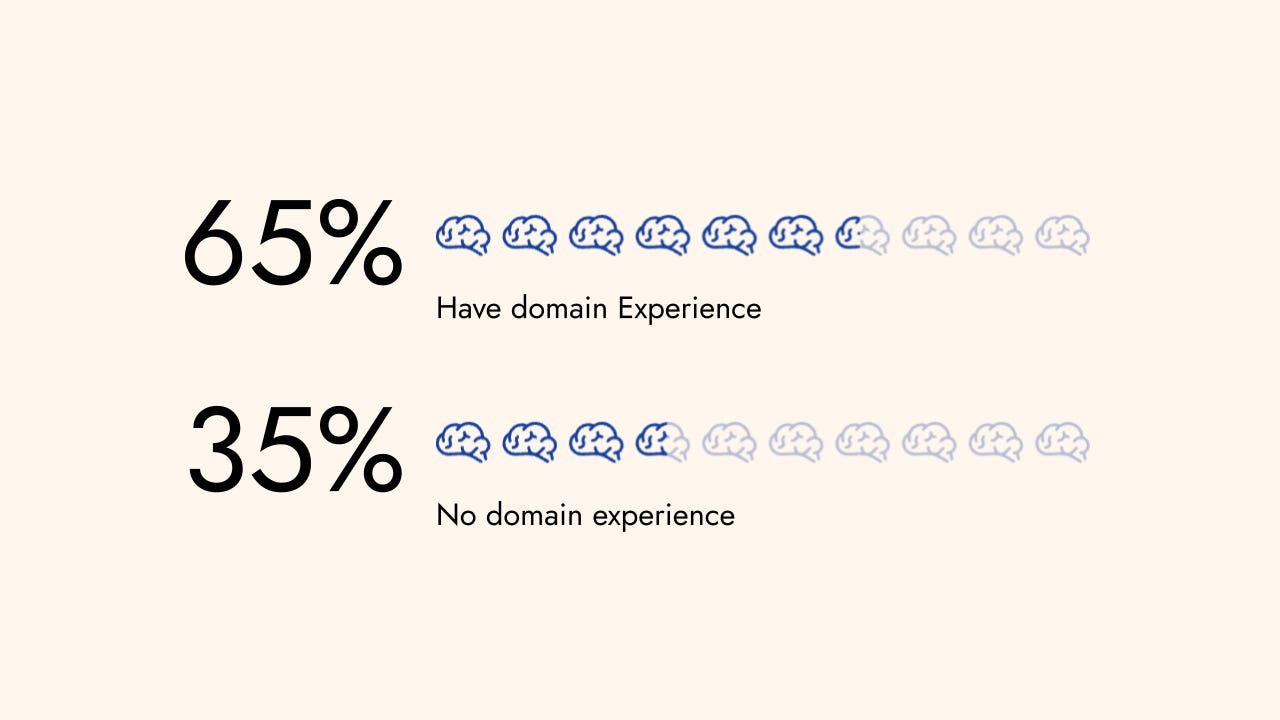
While 47% of founders had worked at unicorn companies, suggesting that elite company experience is valuable, an even more important factor emerged: domain knowledge. 65% of the founding teams had domain expertise related to the problem they were solving.
This makes intuitive sense in the context of AI. The technology itself is becoming increasingly democratized—you can access powerful models through APIs, leverage open-source frameworks, and hire ML engineers. The real competitive advantage often lies in deeply understanding a specific problem space and knowing how to apply AI to solve it in novel ways.
Interestingly, 70% of these companies are building horizontal software (with Harvey being the notable vertical exception), yet domain knowledge still proved crucial. Even when building tools for broad audiences, understanding workflows, pain points, and user needs in depth gives founders a critical edge.
Go-to-Market: Hybrid Is the New Default
Perhaps most telling about the nature of AI-native businesses is their go-to-market strategy. The fact that most founders in the dataset are technical and most products horizontal would suggest a preference towards product-led-growth (PLG). Seventy percent employ BOTH product-led growth and direct sales motions—a hybrid approach that would have been unusual just a few years ago. This dual strategy reflects the unique position of AI products: accessible enough for individual users to adopt independently, yet powerful enough to warrant enterprise-wide deployments.
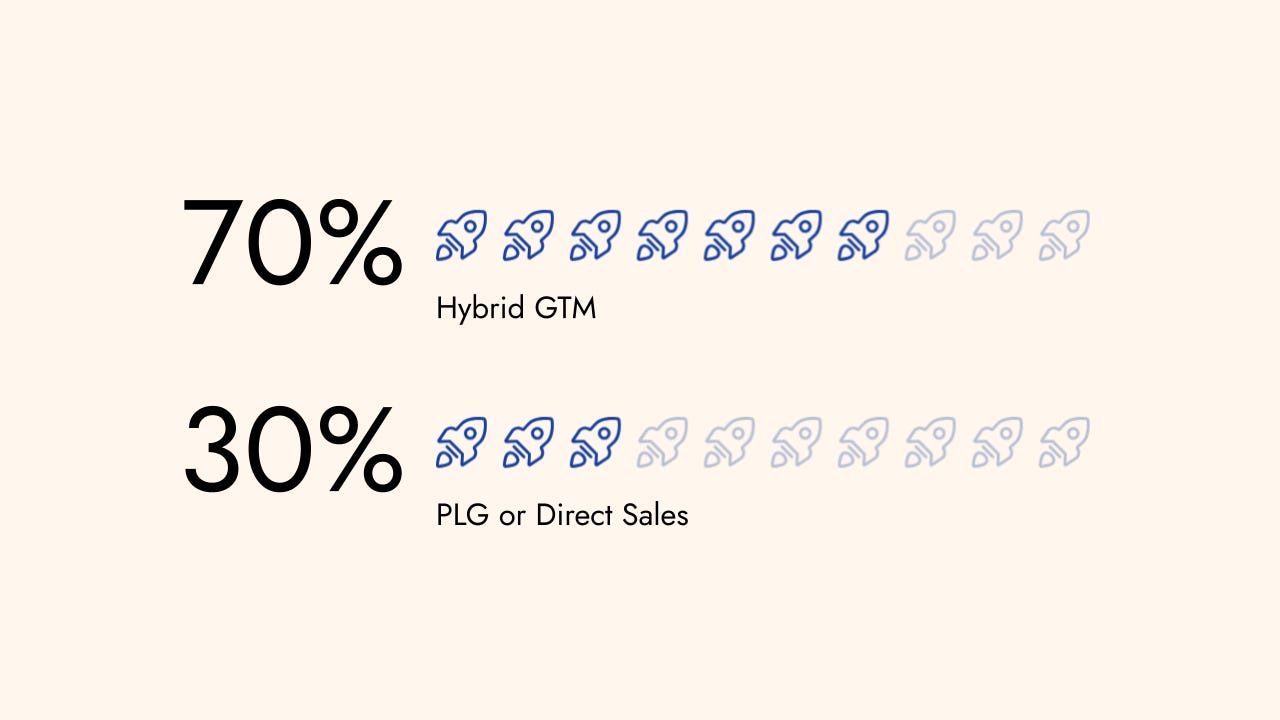
Only 30% of companies pursue a single go-to-market motion, suggesting that the traditional playbooks of pure PLG or pure enterprise sales are insufficient for AI products. These companies have figured out how to let product adoption drive initial traction while building sales organizations to capture enterprise value—a delicate balance that their revenue efficiency numbers suggest they’re managing well.
Extraordinary Capital Efficiency
Perhaps the most impressive metric: these companies have already generated $0.71 in revenue for every $1 raised by founders on average (median of $0.45). They’re averaging $1M in revenue per employee, approximately 10x typical SaaS benchmarks, with a median of $375K per employee—still 4x the norm. You can argue about the stickiness of revenue for some of these companies, but you can’t argue with the numbers: SaaS companies took up to a decade to generate more than $1 in revenue per dollar raised, AI-native companies are getting there much faster.
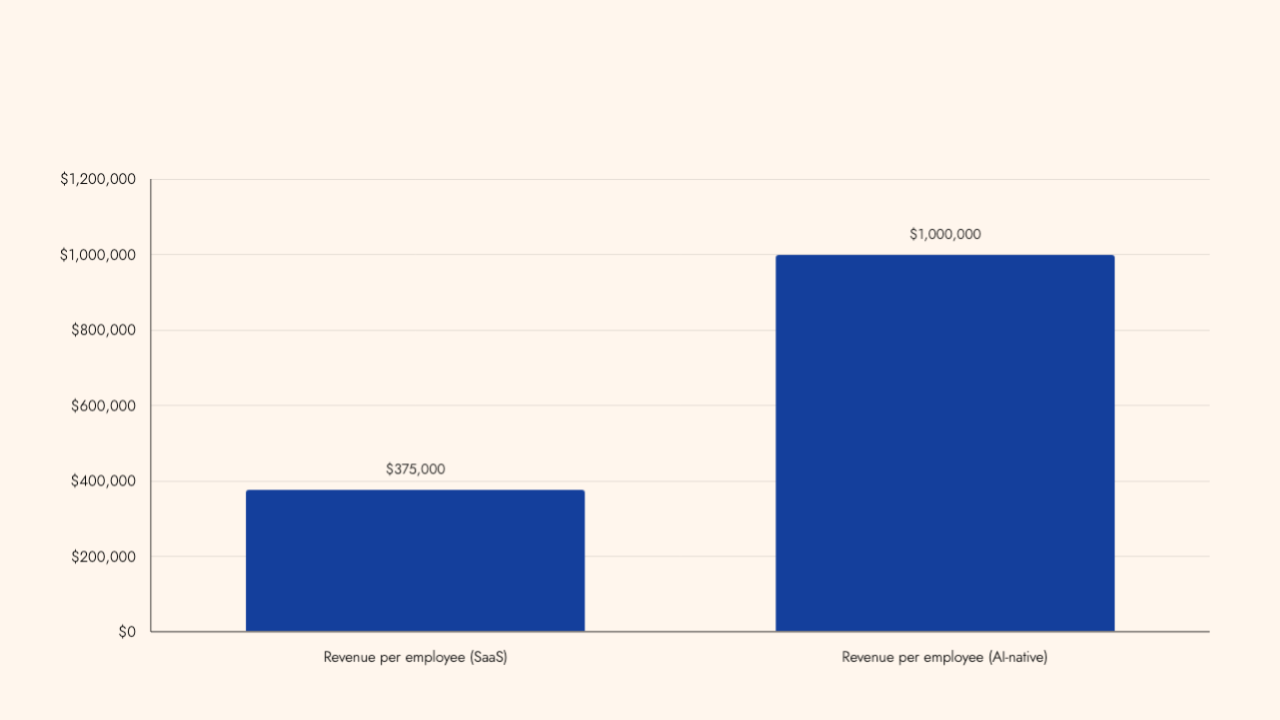
This capital efficiency, combined with revenue-per-employee metrics that reach 10 times SaaS benchmarks for top performers, suggests AI-native founders are building fundamentally different teams with a fundamentally different approach. They run lean teams that move faster because they have fewer coordination costs. They hire high-agency individuals that require less management oversight, allowing them to remain focused on strategy and product. The resulting velocity often matters more than raw feature development capacity.
What This Means for Aspiring AI Founders
Our dataset seems to paint a clear picture: the typical profile of successful AI-native company founders is a technical professional with 5-10 years of experience, deep domain knowledge, and a willingness to challenge conventional wisdom. They’re building with co-founders who bring complementary skills, adopting hybrid go-to-market strategies, and achieving unprecedented levels of capital efficiency.
Obviously, this should be taken with a grain of salt as awesome founders come from very different backgrounds. This is not an exhaustive list and only looks at companies that have publicly shared revenue numbers but it does offer some key insights. You don’t need a PhD from Stanford, a previous exit, or a decade at Google to build a breakout AI company. But you do need technical depth, market insight, and the courage to solve real problems in new ways. The AI revolution is still in its early innings, and the data suggests the winners will be those who combine technical excellence with entrepreneurial execution—regardless of their pedigree. Perhaps the most important lesson of all is that we should question a number of foundational assumptions around founder-fit and who to invest in.
This highlights that successful AI-native founders combine technical depth, domain expertise, and execution-focused teams rather than relying on pedigree or repeat entrepreneurship